




Most people don’t think twice about website hosting until something goes wrong. Maybe the site breaks, a customer can’t make a purchase, or that dreaded “server error” email lands in your inbox at 11 p.m. Suddenly, hosting matters a lot.
Up until that moment, it’s invisible, and honestly, that’s how it should be. But it’s still worth knowing what you’re paying for before you pick a provider.
Think of it this way: your domain name is the street address, and hosting is the house at that address. Without the house, visitors show up to an empty lot.
What hosting actually is
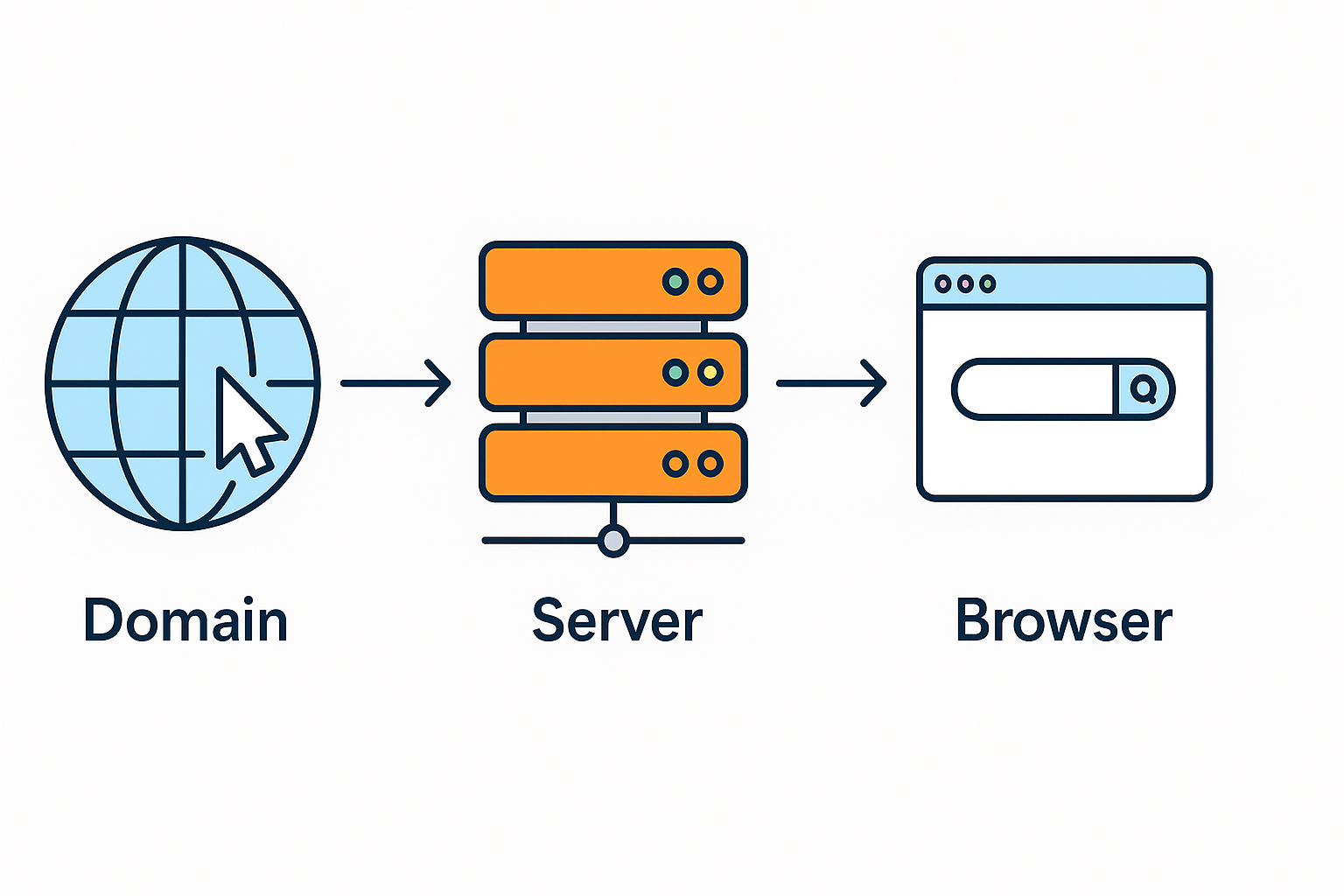
Hosting is basically rented space on a server where your website’s files live. When someone types your domain name, that server sends the right files to their browser so your site appears.
There’s no mystery here, just storage and a computer that’s always on and connected to the internet. That’s it.
Types of hosting
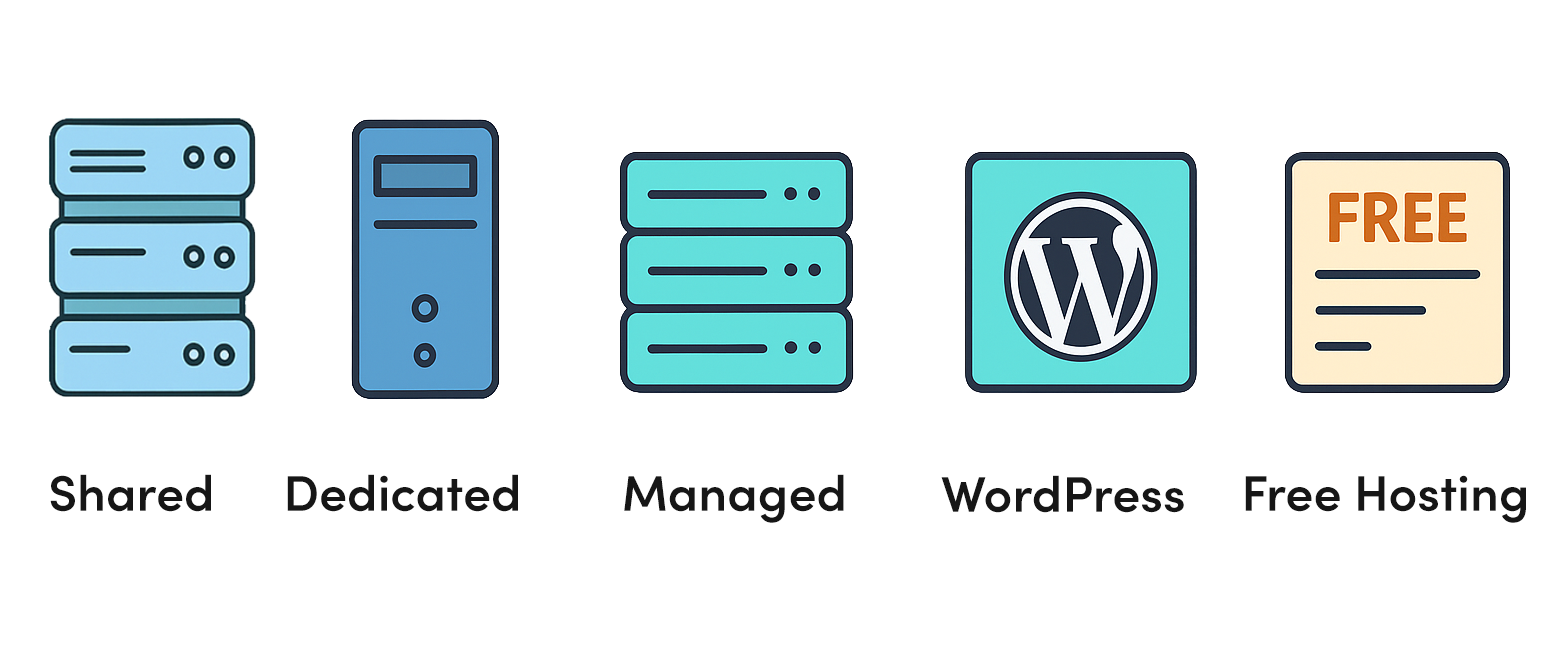
Shared hosting
What it is: One server holds a bunch of different websites, all sharing CPU power, memory, disk space, and bandwidth.
Good for: hobby blogs, test sites, school projects.
Not good for: any business that needs steady performance or real security.
Example: When one site on a shared server gets a traffic spike or runs into security problems, every other site on that same server can slow down or even crash.
Analogy: Shared hosting is like a crowded apartment building. Cheap rent, sure. But if one neighbor leaves the door open, everyone’s belongings are at risk.
Dedicated server hosting
What it is: One server all to yourself with no sharing required.
Good for: busy e-commerce sites, apps, and companies that expect heavy traffic.
Not good for: smaller personal sites that don’t need all that capacity.
Example: Because resources aren’t shared, dedicated hosting keeps your site running smoothly even when traffic doubles or triples during a busy season.
Analogy: Dedicated hosting is like owning your own home. No noisy neighbors, no shared space, full control.
Managed hosting
What it is: The hosting company handles the technical heavy lifting—things like updates, backups, security monitoring, and performance tuning.
Good for: just about every business without a full-time IT person.
Not good for: hobbyists who like to dig into the technical stuff themselves.
Example: Managed hosting takes care of maintenance behind the scenes, keeping your site stable and secure while you focus on running your business.
Analogy: Managed hosting is like hiring a caretaker. You live in the house; someone else fixes the furnace and checks the roof.
WordPress website hosting
What it is: Hosting optimized specifically for WordPress—better caching, plugin compatibility checks, and WP-specific security built in.
Good for: anyone with a WordPress site.
Not good for: sites built on other platforms (obviously).
Example: WordPress-optimized hosting is fine-tuned for faster load times, smoother updates, and more reliable uptime compared to generic hosting.
Analogy: WordPress hosting is like using the right fuel for your car. When you match the fuel to the engine, everything runs smoother and faster.
Free hosting
What it is: Hosting bundled with free website builders like Wix or Weebly. Great for experimenting, not for serious business.
Good for: students, side projects, or prototypes.
Not good for: professional sites or anyone who wants full brand control.
Example: Free hosting usually limits design options and may even stick ads or platform branding on your pages. It’s tough to look professional that way.
Analogy: Free hosting is like a garage band setup—great for practice, but not the place for a professional show.
Why hosting quality matters (and what it can cost you)

Speed — Slow sites lose customers. People click away in about three seconds if a page doesn’t load. Faster sites keep visitors engaged and help with SEO.
Security — Weak hosting can leave you exposed. If your server isn’t secured, your customers’ data and your reputation can both take a hit.
Reliability — Downtime costs money. If your store is down at peak time, that’s real revenue gone.
Scalability — Good hosting grows with you. Bad hosting chokes as soon as your traffic doubles.
Example: When using low-quality hosting, one small issue like a plugin conflict or bad update can spiral into a site crash or checkout failure. Those minutes or hours of downtime can easily cost you sales and credibility.
How MINDSCAPE handles hosting (the practical part)
We partner with WP Engine for WordPress sites and maintain a dedicated, managed environment for our clients. That means:
- Daily automatic backups.
- Automatic core updates with WP Engine’s compatibility testing.
- Access to WP Engine’s support for server-level needs.
- Proactive updates whenever new security vulnerabilities appear.
In simple terms, we control what runs on the server, we keep it up to date, and we don’t share space with random sites that might cause problems. If you want that extra layer of reliability, we also offer a Website Maintenance Program to keep things healthy long-term.
Accessibility and legal risk

Accessibility isn’t optional if you care about customers—and in many cases, it’s required by law.
- WCAG (Web Content Accessibility Guidelines) is the international standard for making web content accessible.
- In the U.S., the ADA (Americans with Disabilities Act) has been interpreted to apply to websites, with official guidance from the Department of Justice.
- Canada, the EU, and other regions have similar accessibility laws and standards.
In plain English: if people can’t use your website, they can’t buy from you. And yes, you can face legal action. That’s why pairing solid hosting with a tool like AccessiBe is a smart move. It doesn’t replace a full accessibility audit, but it helps automate compliance basics.
How to pick hosting (a short checklist you can use right now)
Choosing a website hosting solution doesn’t need to be complicated. If you’re just putting a site together for practice or fun, go ahead and start with something free or inexpensive. No shame in testing the waters.
If your website represents your business or handles anything more serious than a few photos and a contact form, managed hosting is worth every penny. It allows you to focus on running your business instead of fixing your site.
If your site is built on WordPress, do yourself a favor and pick hosting that’s made for it. You’ll skip a lot of headaches, and your site will run smoother from day one.
SEO and hosting (why you should care)
Good hosting keeps your site quick, stable, and easy to use. It also gives your SEO a boost. Search engines pay attention to how fast your pages load and how long people stick around. If your site crawls or crashes, rankings (and visitors) start to slip.Want to see how it all fits together? Check out What’s the Difference Between SEO and Paid Media for a closer look at how hosting supports your overall marketing strategy.
Common mistakes to avoid
After working with hundreds of websites, we’ve seen the same hosting mistakes pop up again and again. Here are the big ones to watch for:
- Choosing the cheapest host because “it’s only a small site.” Cheap can cost you more later.
- Skipping backups because “I’ll just restore it if something breaks.” If the backup isn’t automatic and tested, it’s not really a backup.
- Using shared hosting for e-commerce without thinking about credit card security standards (PCI compliance).
- Ignoring accessibility? That’s asking for trouble.
Final, blunt advice
If your website drives revenue or represents your brand, don’t cut corners on hosting. Spend a little more for a managed WordPress environment on a dedicated server with automatic backups and updates. It’ll pay for itself by preventing outages, protecting data, and keeping things fast for your visitors.
If you want the safe option we use for clients, MINDSCAPE provides managed WordPress website hosting on dedicated WP Engine servers and a Website Maintenance Program to keep everything running smoothly. For accessibility, we also partner with AccessiBe to help keep client sites compliant.