




Let’s face it—marketing jargon can feel like ordering sushi for the first time. You nod and smile, but deep down you’re wondering, “What’s the difference between SEO and PPC, and why do they both sound like taxes?”
If you’ve ever wondered how SEO and paid advertising (a.k.a. PPC) differ—and whether your business actually needs both—you’re in the right place. Let’s break it down without breaking your brain.
SEO vs. PPC: A Breakdown
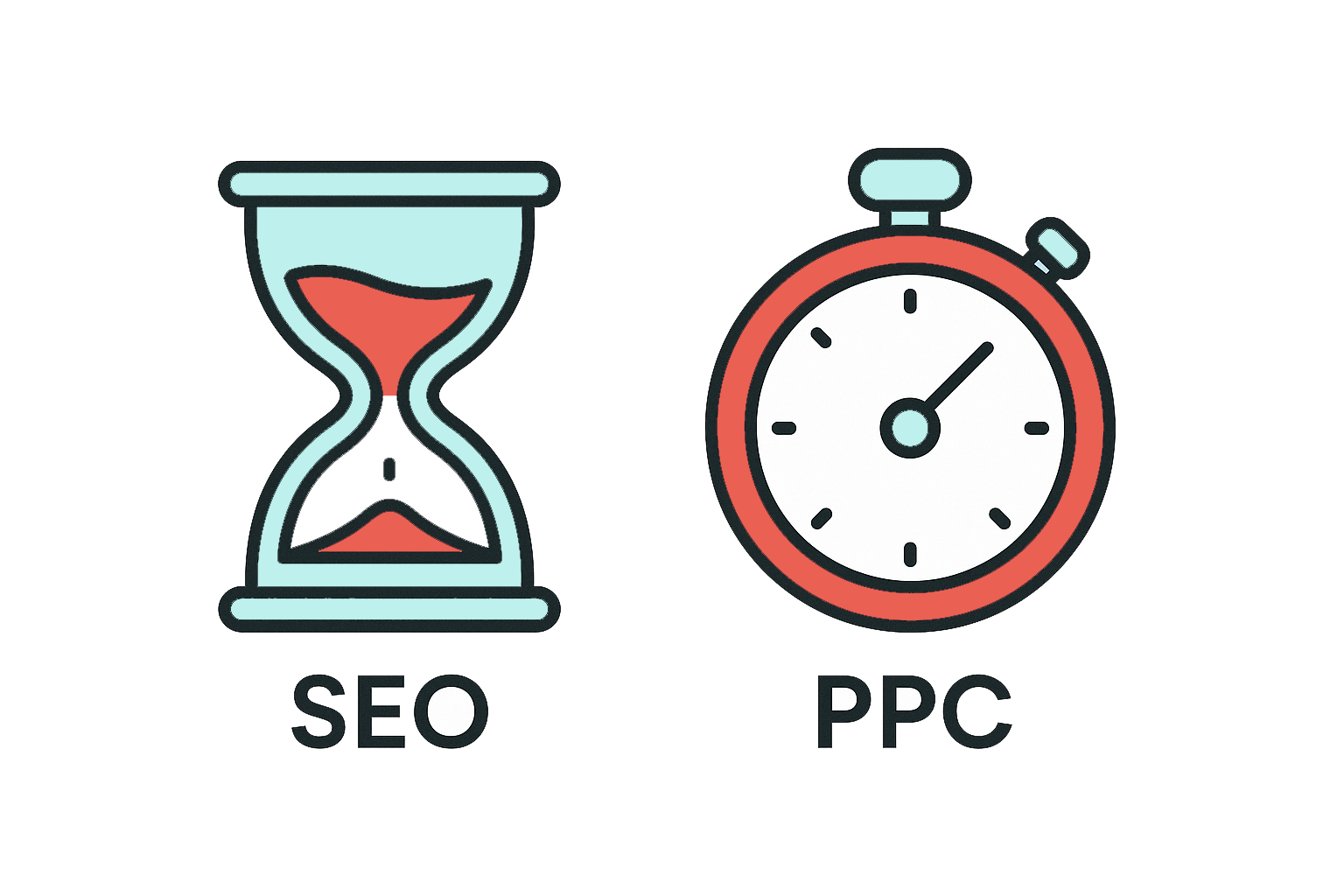
Think of SEO and PPC as two ways to get to the same destination, like driving cross-country. SEO is taking the scenic route: you build equity along the way, but it takes time. PPC is the highway: fast, direct, but you’re paying for every mile. Let’s look at what actually goes into each one.
Search Engine Optimization
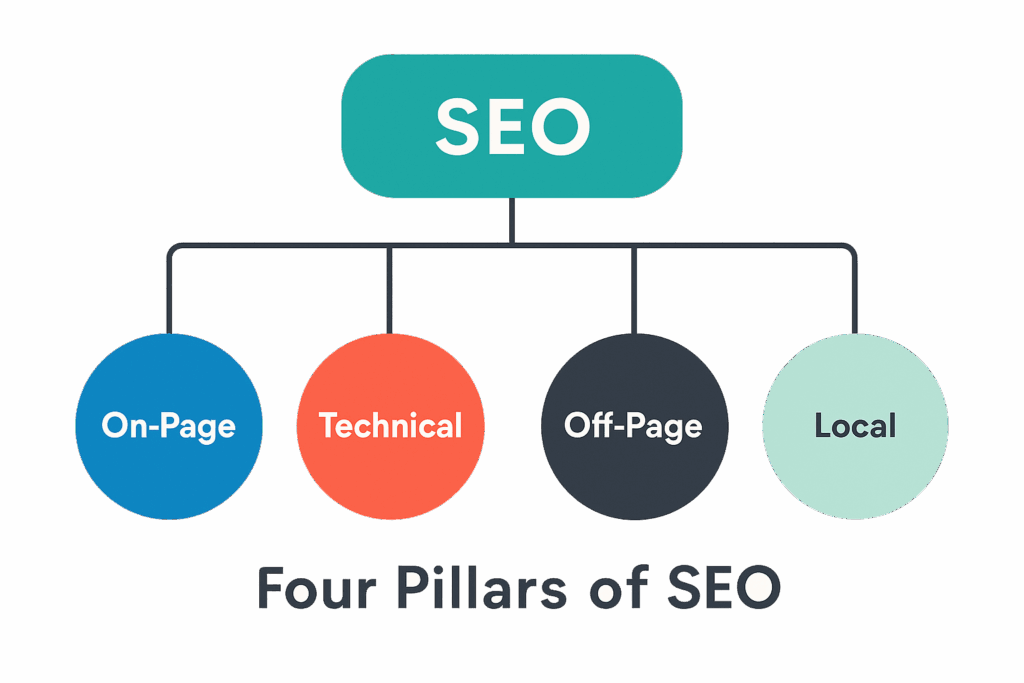
SEO is all about making your website irresistibly attractive to search engines (and people!) so your site ranks higher in organic (unpaid) results. It’s a long-term play focused on building authority, improving visibility, and driving qualified traffic without having to pay for every click.
Here’s what’s under the SEO hood:
On-Page SEO
This is your front-facing content strategy. It involves optimizing keywords, headers, meta tags, internal links, image alt text, and even URL slugs to align with search intent. It’s like decorating your store window to draw people in—except the “people” are Google’s crawlers, and they love tidy layouts, topical relevance, and semantically rich content. Key elements include:
- Keyword targeting and mapping
- Headings and meta tags
- Internal linking
- Featured snippet optimization
- Content clusters for topical authority
Technical SEO
This is the invisible infrastructure. It ensures your site is easy to crawl, fast, and stable. Some key components:
- Core Web Vitals
- Mobile-first design
- Structured data/schema markup
- Proper redirects
- XML sitemaps and robots.txt
If your site loads like it’s on dial-up or Google can’t index it properly, your content won’t matter. This is foundational stuff—and it pays off.
Off-Page SEO
Off-page SEO builds trust and authority outside your website. The biggest factor here? Backlinks. These are links from other websites pointing to yours—sort of like getting tagged in a flattering photo. Google interprets it as, “Other people trust this site.”
- Digital PR and earned media
- Guest blogging
- Social proof signals
- Disavowing spammy links
Think of backlinks as references on a résumé. One from a trusted industry source beats ten from sketchy blogs with popup ads and questionable health tips.
Local SEO
If you serve a geographic area, local SEO is essential. It’s about dominating the “map pack” and showing up for “near me” searches. Tactics include:
- Google Business Profile optimization
- Consistent NAP (Name, Address, and Phone) citations
- Google Posts
- Collecting and responding to reviews
- Mobile-first usability for local queries
Local SEO is where online effort meets offline foot traffic. If you’re not managing it, your competitor probably is.
Pay-Per-Click Advertising (PPC)
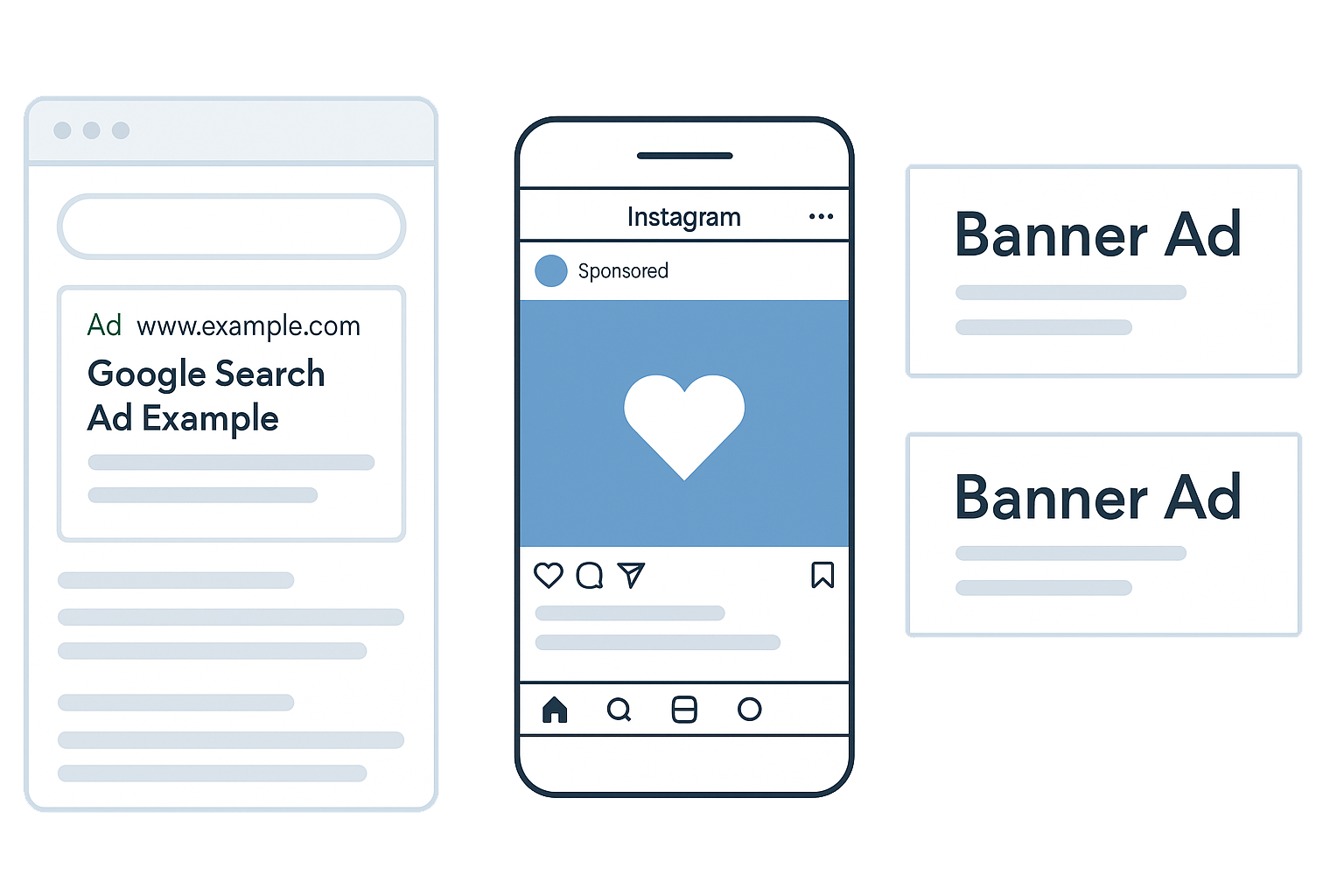
PPC is the sprint to SEO’s marathon. You pay to show up in search results or social feeds, targeting users with precision. When done right, it delivers fast results, granular insights, and strong ROI. When done poorly . . . well, it’s like lighting your ad budget on fire.
Here’s what’s in a robust PPC strategy:
Google Search Ads
These are the text-based ads at the top of Google results. You bid on keywords, write compelling copy, and optimize for clicks. But it’s not just a bidding war—Google uses a Quality Score formula to determine your ad position and cost-per-click (CPC), based on:
- Ad relevance
- Landing page experience
- Expected clickthrough rate (CTR)
Other must-knows:
- A/B testing ad variations helps improve performance fast
- Ad extensions (like sitelinks, callouts, and lead forms) increase visibility and CTR
- Match types (broad, phrase, exact) control how tightly your keywords trigger ads
- Negative keywords help block irrelevant traffic—if you’re selling luxury watches, you don’t want your ad showing up for “cheap knockoffs.” Add terms like “free,” “DIY,” or competitor brand names you don’t carry to avoid wasting spend
Google Display Network (GDN)
Display ads are visual banners that appear across websites, apps, and YouTube videos. They’re not as intent-driven as search ads, but they’re powerful for:
- Brand awareness
- Retargeting
- Audience discovery
Modern display campaigns use responsive ad formats that auto-adjust based on device and placement. You can also exclude sites or categories to protect brand safety and avoid wasting budget.
Social Media Ads
Social ads run on platforms like Facebook, Instagram, LinkedIn, and TikTok. The targeting here is next-level—demographics, interests, behaviors, even recent life events (yep, Facebook knows you are engaged).
Platform use cases:
- Facebook/Instagram: Great for visual storytelling and wide demographic reach. Also great for retargeting.
- LinkedIn: Best for B2B and professional targeting
- TikTok: Discovery tool for younger audiences and trend-based products
You can align ads to different funnel stages—video for awareness, lead magnets for consideration, and testimonials or promos for conversion. Just don’t run the same ad for six week
Retargeting Ads
These ads show to people who already interacted with your brand—visited a page, clicked an ad, added to cart, or just lurked. Retargeting works because:
- You’re advertising to a warm audience
- You can segment by behavior (cart abandoners vs. blog readers)
- You control frequency and timing to avoid creative burnout
It’s like sending a polite reminder email, but instead of an inbox, it’s everywhere they go online.
Shopping/Product Listing Ads (PLAs)
If you sell physical products, Google Shopping Ads are the gold standard. These show product images, prices, titles, and reviews right in search results—before the user even clicks. These types of ads are best for high-intent shoppers who are already comparison browsing.
- Product feed optimization is key
- Google Merchant Center is required
- Negative keywords filter out irrelevant clicks
- ROAS can be very high with a proper campaign setup and segmentation
Benefits of Integrating SEO & Paid Media
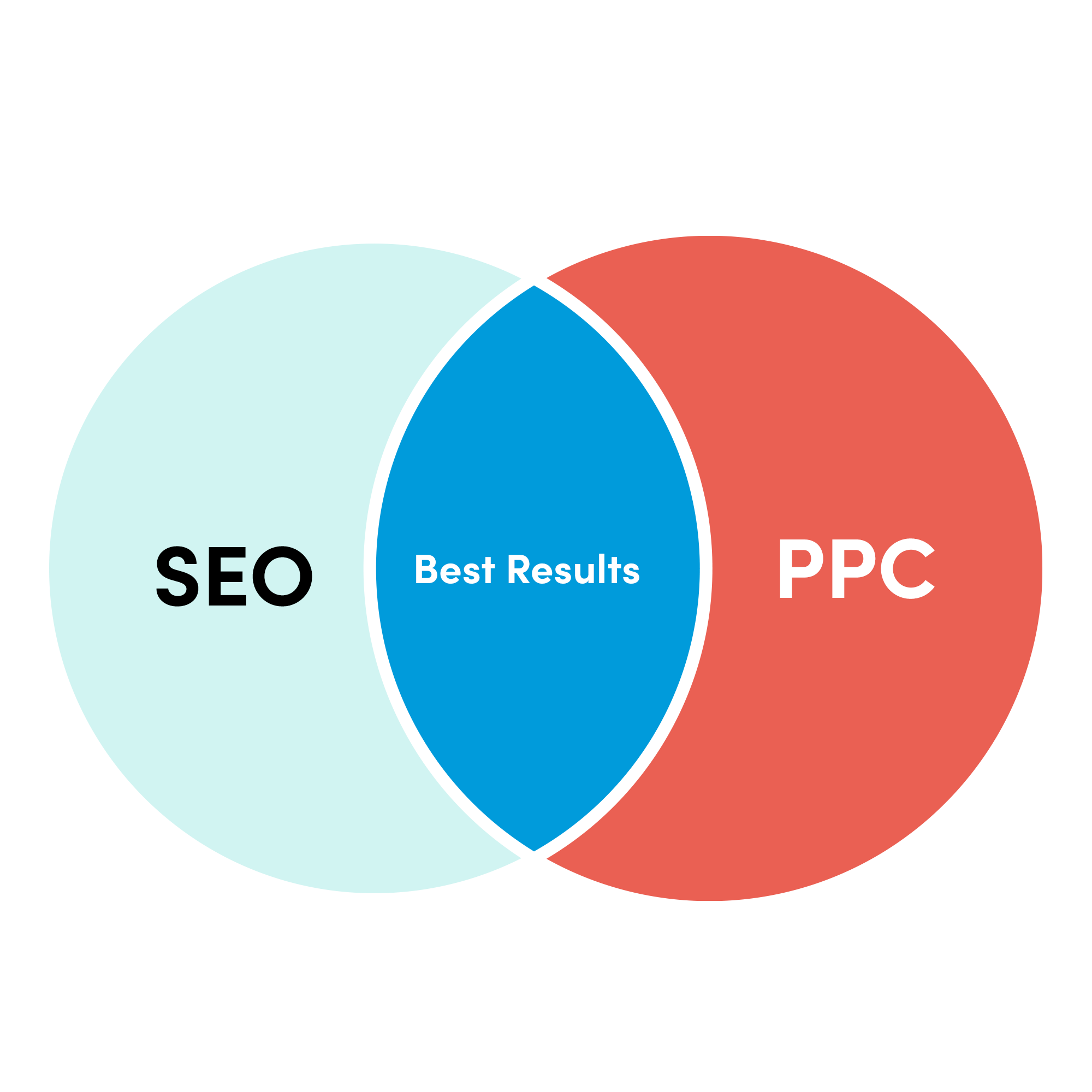
1. Double Your Visibility
When you appear in both paid and organic search results, you take up more real estate on the page, and that matters. Users are more likely to trust and click on brands they see multiple times. Even if they skip the ad, the brand recall kicks in when they see you again in the organic listings (and vice versa). It’s a simple way to increase both trust and click-through rate without doubling your content efforts.
2. PPC Reveals What Works for SEO
PPC campaigns give you immediate feedback on which keywords convert, which landing pages resonate, and what messaging gets attention. Instead of guessing what content to create for SEO, you can use PPC data to guide it. Example: If your ad for “affordable payroll software” is crushing it, that’s a signal to create blog posts, case studies, and FAQs targeting that keyword organically. It’s like using paid media as your R&D lab for SEO.
3. SEO Builds Equity, PPC Buys Time
SEO is a long-term investment that keeps paying dividends long after the work is done. But it doesn’t happen overnight. PPC fills that gap. While your SEO strategy gains traction, paid ads keep leads flowing. When both are humming, PPC supports campaigns and short-term offers, while SEO works in the background like a reliable engine you don’t have to restart every day.
4. Retargeting Closes the Loop
Most people won’t convert the first time they visit your site, whether they came from an ad or a blog post. Retargeting lets you follow up with a second (or third) message tailored to their behavior. Someone who reads a service page might see a case study. A cart abandoner might get an offer. You’re not chasing cold leads—you’re gently nudging warm ones toward the finish line.
Which One Is Right for Your Business Stage?
Startups & New Sites
When you’re just getting started, SEO won’t deliver fast enough. You’re competing against well-established domains, and Google’s trust takes time. PPC gives you an immediate way to drive traffic, test messaging, and validate offers. Use this phase to figure out what works—then document those learnings to shape your SEO content strategy. Bonus: A few branded search campaigns can
Growth-Stage Companies
At this stage, you’ve got some traction and are ready to scale. This is where SEO and PPC should work together. Invest in SEO to start owning high-value keywords and reduce your long-term cost per acquisition. Use PPC to support promotions, A/B test new offers, or dominate competitive keywords you can’t rank for yet. This is also a good time to implement content marketing, lead magnets, and marketing automation—feeding both organic and paid channels.
Established Brands
With solid brand recognition and an SEO foundation in place, your PPC strategy can shift from broad lead generation to more focused goals, like product launches, remarketing, or entering new markets. Think of SEO as your engine—it keeps the business moving steadily forward. PPC is your turbo boost: you use it strategically when you need a burst of speed, visibility, or reach. At this stage, it’s also smart to run branded PPC ads to protect your name from competitors trying to outrank you in search.
Long-Term Strategy Considerations
Why SEO Wins the Patience Game
- Cost-effective over time
- Builds authority and trust
- Evergreen content keeps ranking
- Doesn’t stop working when you stop paying
Why PPC Keeps You Nimble
- Perfect for seasonal, local, or product-driven campaigns
- Easy to scale up or pause
- Helps maintain brand visibility while SEO ramps up
The best approach? Play the long game with SEO and use PPC to stay agile in the moment.
Real-World Examples of SEO and Paid Media in Action
The Brisket
A local BBQ joint invests in content, gains backlinks, collects Google reviews, and optimizes for “best brisket in Grand Rapids.” After 6 months, they’re #1 in search and booked solid on weekends. Slow-cooked traffic at its finest.
The Hot Pocket
A new meal-prep startup uses Google and Instagram ads to get immediate orders from fitness-conscious shoppers. Sales roll in within hours. It’s fast and filling—but only while the ad spend flows.
The Smart Move
Use PPC for the now. Use SEO for the next.
Common Misconceptions About SEO and PPC
“SEO is Free”
It may not cost you per click, but it costs you in time, talent, tools, and consistent effort. SEO is more like farming—slow, deliberate, resource-heavy, but the harvest is worth it.
“PPC Guarantees Sales”
PPC doesn’t guarantee anything—not impressions, not clicks, and definitely not sales—if it’s not set up properly. Without strong tracking, targeting, compelling ad copy, and a clear offer, you could end up paying for exposure that doesn’t move the needle. Even with traffic, if your landing page is clunky or your CTA is buried, you’re just funding bounces.
“You Only Need One Strategy”
Relying solely on SEO or PPC is like trying to row a boat with one oar—you’ll move, but not in the direction you want. The two strategies cover different parts of the buyer journey and are strongest when working together.
“SEO Results Are Permanent”
SEO rankings can disappear overnight if you stop updating content, neglect site health, or get outranked by better content. Just because you made it to page one once doesn’t mean you’ll stay there forever. It’s more like a gym membership than a diploma—you’ve got to keep showing up.
“PPC Is Too Expensive”
PPC can be expensive—but it’s not inherently so. With good targeting, compelling creatives, and conversion tracking, you can get an excellent return on ad spend. The key is knowing what a lead is worth to you and managing your budget accordingly.
Bringing It All Together
SEO and paid media aren’t enemies. They’re teammates. If you’re launching something new, start with PPC to gain traction. Then invest in SEO to build sustainable momentum. The smartest marketers don’t choose sides—they build systems that use both.