



If your holiday marketing plan is still a note that says “do something for Black Friday,” you’re not alone, and you’re not out of time. Thanksgiving is November 26 this year and Christmas Eve is a Thursday. That leaves about six weeks: too short for a brand-new strategy, but plenty for campaigns that use what you already have.
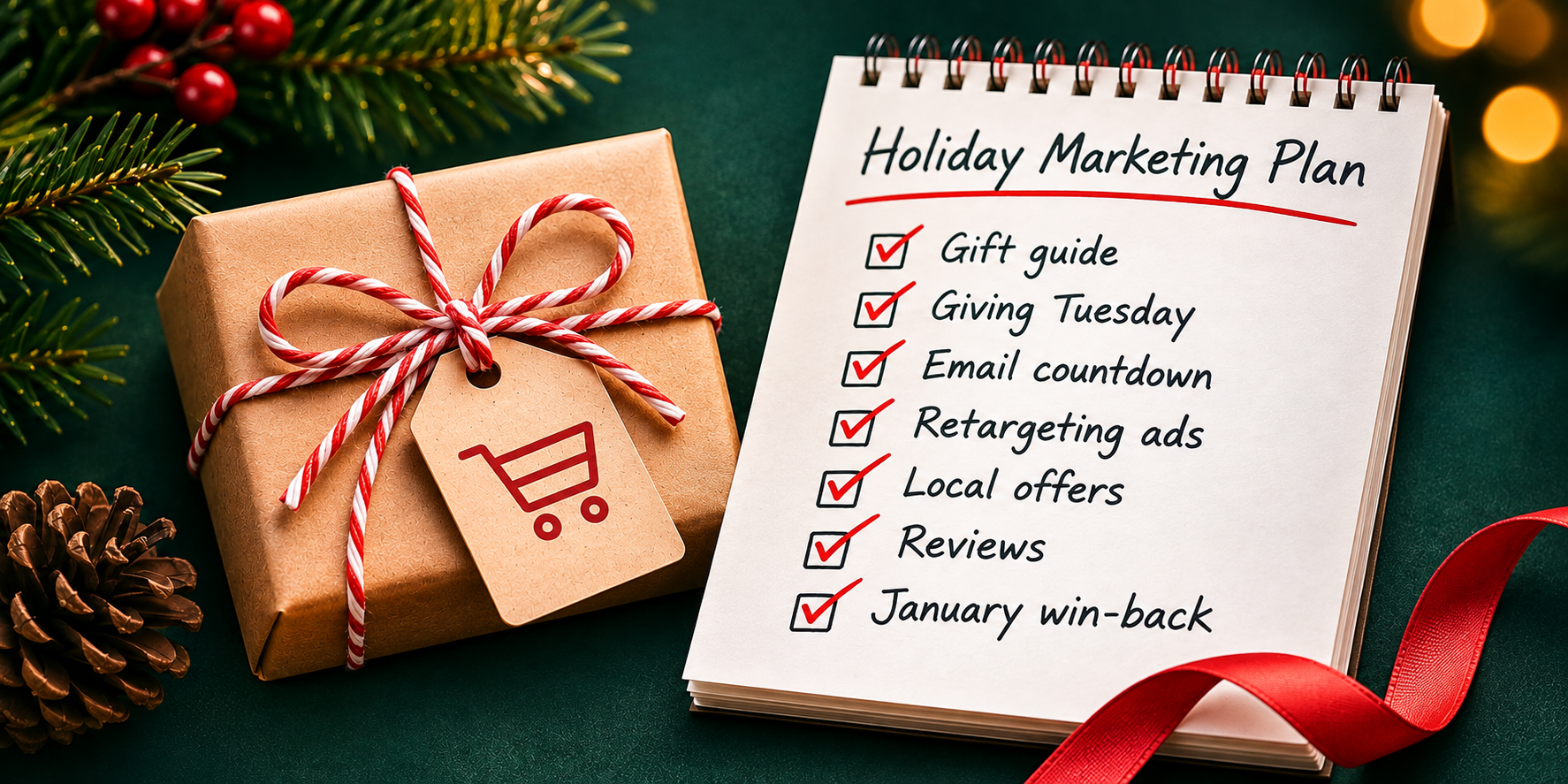
Small businesses should run campaigns that use existing customers, existing content and existing channels: a gift guide, Giving Tuesday, an email countdown, retargeting ads, local offers, a review push and a January win-back. Skip anything that needs a new website, a new platform or a big new audience.

1. Publish a gift guide
A gift guide gives shoppers a shortcut and gives you a page to send every email, ad and social post to. Group your products or services by person (“for the new homeowner”), price (“under $50”) or need. Service businesses can do this too: gift cards, packages and “treat yourself” bundles all count. Publish it on a page you can reuse every year, and add short answers to common questions so it can show up in Google’s AI Overviews.
2. Plan a Giving Tuesday tie-in
Giving Tuesday falls on December 1 this year, the Tuesday after Thanksgiving. A simple pledge, like donating a share of that day’s sales to a local nonprofit, gives customers a reason to buy that isn’t another discount. Pick a cause your customers already care about, tell them the exact amount or percentage, and share the total afterward. Follow through publicly; that’s what builds trust.
3. Run an email countdown
Your email list is the cheapest holiday channel you have. Plan a short sequence: an early-access offer for subscribers, a Black Friday announcement, a Cyber Monday reminder, and “last day to order” or “last day to book” deadlines in December. Deadlines do the selling. Before you send, check that your list is clean and your sending domain is set up correctly, so the emails land in inboxes and not spam.
4. Turn on retargeting ads
Retargeting shows ads to people who have already visited your site, so it costs less per sale than reaching strangers. Set up audiences in Google Ads and Meta from your site visitors over the last 30 to 90 days, then point the ads at your gift guide or holiday offer. Keep the creative simple: the offer, the deadline and one image. Cap frequency so the same person doesn’t see you 20 times a day.
5. Make local offers
Local shoppers want to support nearby businesses during the holidays, especially around Small Business Saturday on November 28. Post your offer to your Google Business Profile, partner with a neighboring business for a cross-promotion, or join a downtown holiday event. In Michigan, think about weather too: a “snow day” deal or curbside pickup gives people a reason to buy on a day they’d rather stay home.
6. Push for reviews
The holidays bring more customers than any other time of year, which makes it the best season to ask for reviews. Send a short, friendly request with a direct link to your Google review page a few days after every purchase or appointment. More recent reviews help you show up in local search and in AI assistants’ recommendations next year, too.
7. Plan a post-holiday win-back
Most businesses go quiet after December 25. That’s an opening. Write a January email series for new holiday customers: a thank-you, a gift-card reminder, a “how’s it working?” check-in and a reason to come back. Pair it with a small retargeting campaign for people who visited in December but didn’t buy. Set it up now, so it runs while you’re catching your breath.
Paid media: cap spend early and check your tracking
Ad costs climb through November as big retailers raise their bids. Set a daily budget cap before Black Friday weekend, and plan to move money toward whatever is working after the first week, rather than spending your whole budget on day one.
More important: make sure your ads can tell you what’s working. We learned this on our own account. One of our Google Ads campaigns drew plenty of clicks at a healthy click-through rate but recorded almost no conversions, and a few smaller campaigns showed none at all. The problem wasn’t the ads; it was what happened after the click, and whether we were measuring it.
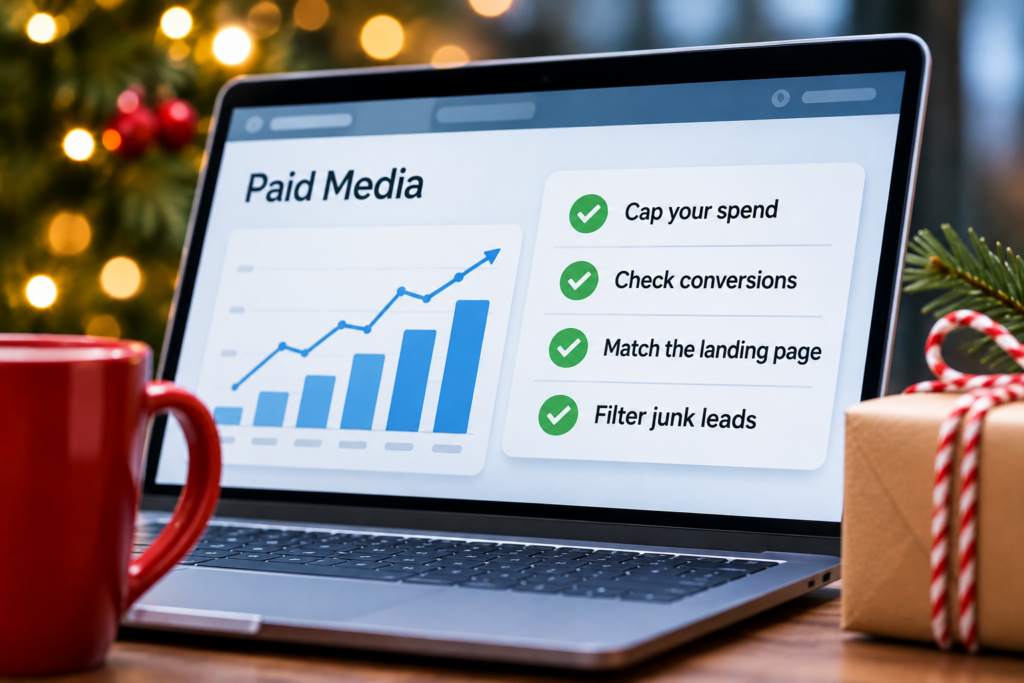
Before you raise any holiday budget, check three things:
- Conversions are firing. Submit your own form or place a test order and confirm it shows up in Google Ads and GA4.
- The landing page matches the ad. If the ad promises a holiday offer, the page should open with that offer, not your homepage.
- Junk leads are filtered. Spam form fills can make a campaign look better than it is. A simple honeypot field or bot-filtering tool keeps your numbers honest.
Other questions you may have
Is it too late to start holiday marketing in November?
No. Campaigns that use your existing customers and channels, like email, retargeting and Google Business Profile posts, can launch in days. What’s too late is anything that depends on a new website or a big new audience.
How much should a small business spend on holiday marketing?
There’s no single right number. Many small businesses start with a few hundred to a few thousand dollars on top of their normal budget, weighted toward retargeting and email. Spend more only on channels you can measure.
Which holiday campaign works best for a small business?
For most, an email countdown to an existing customer list earns the most for the least money. Pair it with retargeting ads for people who visited your site but didn’t buy.
Should I keep marketing after Christmas?
Yes. Gift-card holders, new customers and returns create a second wave in January. A short win-back email series keeps those customers coming back.
Whatever your marketing needs this season or next, our team is happy to help.
The holiday season moves fast, but a smart marketing strategy can help you make the most of every opportunity. Whether you need help launching a last-minute campaign, optimizing your paid ads, or planning for growth in the new year, MINDSCAPE is here to help.